
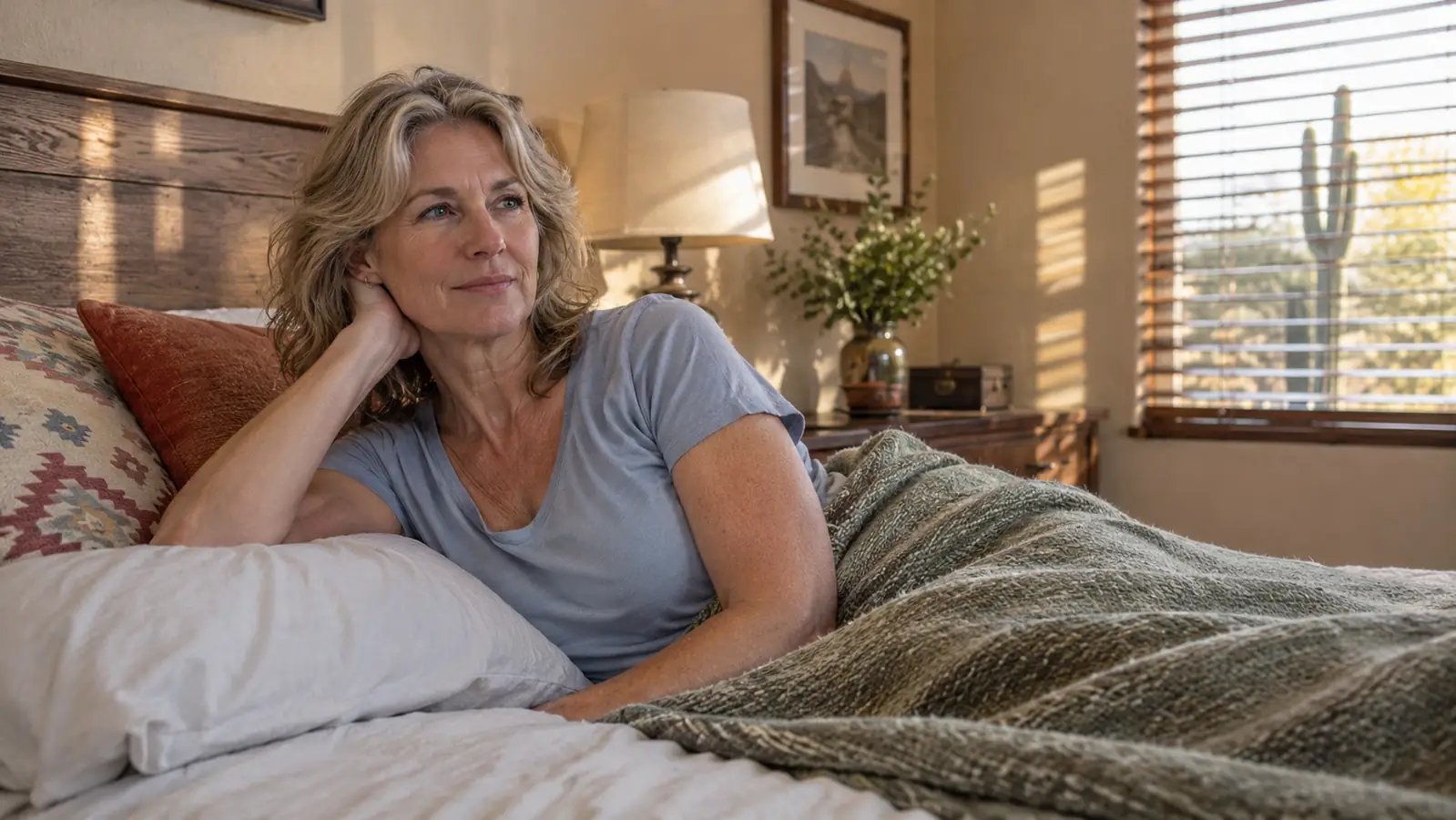
Short answer: if you are a hot sleeper who kicks a regular comforter off the bed by 2 a.m., the inhand Cooling Blanket is the better top layer for you. If you sleep cold, or you share a bed with someone who sleeps cold, a regular comforter still does a job a cooling blanket cannot. I am Joanne Vasquez-Hill, 51, and I run the front office at an elementary school in Tucson. My husband Ray is 55, works on HVAC systems all day, and wants the house at 72 with a heavy blanket on his side of the queen bed we share. I bought the inhand blanket in early July, queen size, 90 by 90, and I have used it every night since. It is my only top layer. I fold it in half lengthwise so it covers my half of the bed and leaves Ray's alone. It is not a cure for night sweats. It is a cooler layer to get under, and that has been enough to change how often I wake up tangled in covers.
Here is the honest comparison, and I will not dress it up. A regular comforter is built to trap warmth. That is the whole job. The inhand is built to feel cool at first touch and stay light, one layer of nylon cooling fabric on the front side, plain weave, machine washable. I am not going to tell you it stays cold all night. It does not. It feels cool when I get in, and within an hour it has warmed to my body. The difference is what happens after that. Our old down-alternative comforter warmed up and kept going, so by midnight I was sleeping under a cloud of my own heat and pushing it off with my feet. The inhand warms up and then sits there, thin. When I push it off at 3 a.m. it comes off easily, and when I get cold twenty minutes later it goes back on just as easily. That small mechanical difference is most of why I kept using it.
| inhand Cooling Blanket | Regular Down-Alternative Comforter | |
|---|---|---|
| First touch | Cool nylon face feels cool when I get in | Fabric feels neutral or already warm |
| Breathability | Single layer, lightweight, less heat trapped | Loft and fill trap warmth by design |
| Warmth on a cold night | Little insulation, I need another layer when the house cools down | Holds body heat well |
| Weight and drape | Light, moves with me when I turn | Puffier, bulkier, harder to shove aside half asleep |
| Shared bed | Queen 90 by 90, but I fold it to my half | One top layer covers both sleepers |
| Night-long cooling | No. It warms to body temperature within about an hour | No, and it holds the heat it takes in |
| Care | Machine wash, single layer, line dries in a couple of hours | Machine wash, bulky and slow to dry |
| Year-round use | Best for spring and summer | Better for the cool months |
| Best for | Hot sleepers who want a cooler top layer | Cold sleepers and cool bedrooms |
What the Cooling Fabric Actually Does
The listing says the front side is 100% cooling nylon and calls the fiber arc-chill. I cannot verify fiber engineering from a bedroom in Tucson and I am not going to pretend I can. What I can tell you is what happened the first night, which was July 6, a Sunday, with the outside temperature still at 96 when I went to bed at 10. I had washed it once on cold and hung it over the back of the chair in the corner to dry, and it was dry in a couple of hours, which surprised me. I got in, pulled it to my shoulders, and my arms and chest felt cooler than the sheets underneath. Not ice cold. Cooler, the way the tile floor in the hallway feels at 6 a.m. before the sun gets around to the west side of the house. I read for about fifteen minutes and never once thought about the bedding. In July that is unusual for me.
Two things make that happen and neither one is complicated. The first is the fabric itself, which is smooth and has a cool hand-feel the way a nylon windbreaker does when you pick it up in the shade. The second is that there is no fill. A comforter has loft, and loft is a pocket of air that your body heats and then sits in. The inhand is a single layer, so there is no pocket to heat. It drapes instead of puffing. At 90 by 90 it is generous for a queen, and folding it lengthwise gives me roughly 45 inches of width, which is about my half of the mattress plus a little overhang on my side. When I roll from my back to my side at 1 a.m. it comes with me instead of staying where it was. I used to wake up with a wad of comforter around my ankles and my shoulders bare. That stopped happening.
What the fabric does not do is stay cold. Nothing short of a machine does that, and I would be careful with anything that claims it. The cool feeling is a starting condition, not a setting. My Honeywell TurboForce fan on the nightstand does the rest of the work, on low most nights, medium when I wake up hot. The two together are what got me through July. Care is easy enough that I actually keep up with it. It goes in the machine on cold with the CGK sheets on Saturday morning, and I hang it over the chair to dry while I do the rest of the house. That is the other practical difference. The old comforter took two cycles in the dryer and came out in a knot, so I washed it twice a season at best. This one gets washed weekly, which matters in a house with desert dust coming through the windows.
Where inhand Cooling Blanket Wins
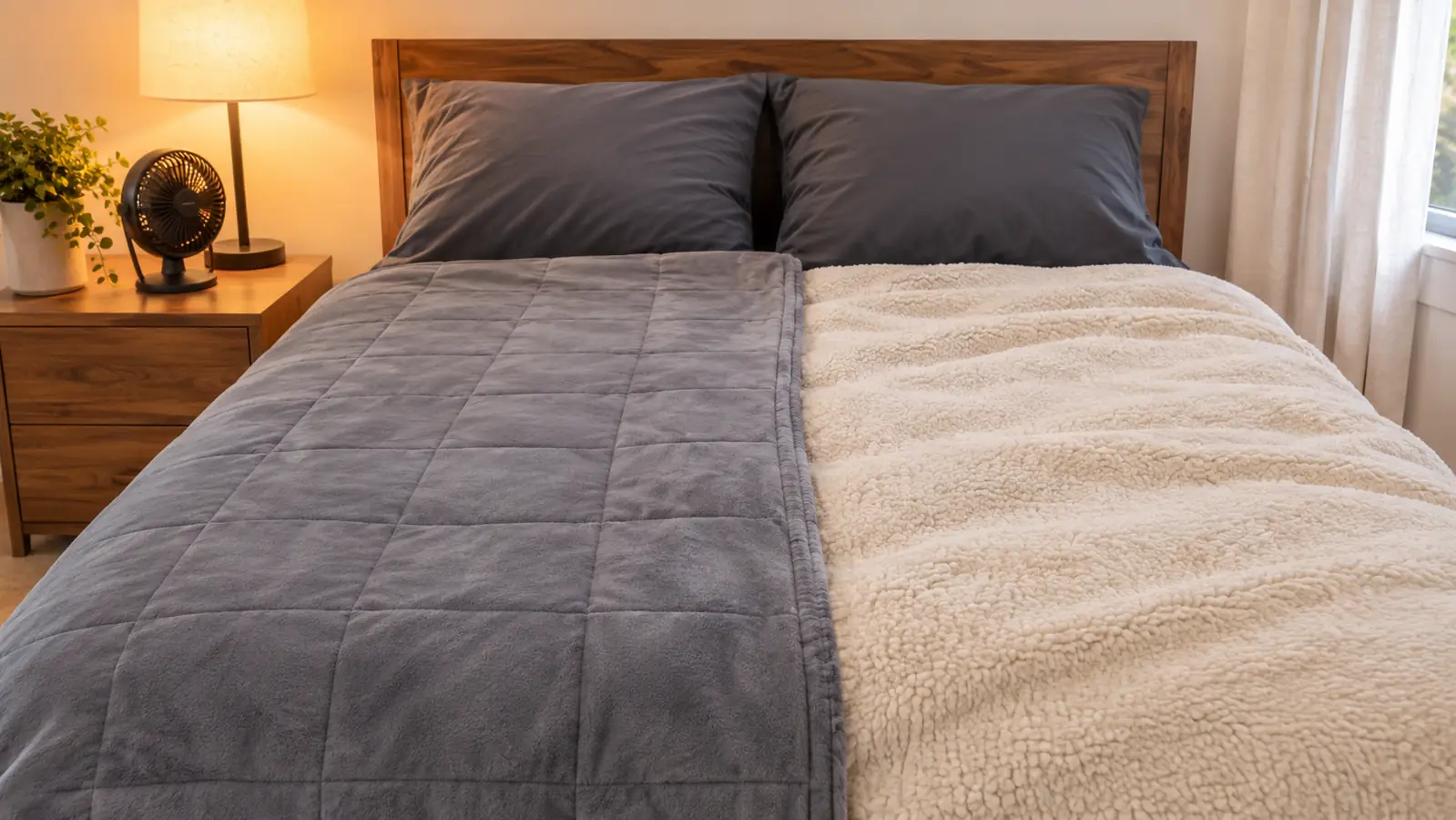
The night that pushed me to buy it was in late June. I had turned the thermostat down to 70 because I was desperate, and around 2 a.m. Ray woke up cold, walked out to the hall, and turned it back to 72. I was still too hot under the shared comforter. That is the whole story. Nobody was wrong. He was cold at 70 and I was hot at 72, and one comforter cannot serve both of those people. The first win for the inhand is the first ten minutes of the night. I get into bed around 10, the room is 72, and the fabric is cool on my arms and chest. That sounds small until you have spent three summers lying on top of a comforter with a fan on your face, waiting for your skin to stop buzzing. Now I get under the blanket and read, and I am not fighting the bedding before I even try to sleep.
The second win is weight. I am up at 5:45 on school days, and every time I wake up at 2 a.m. to rearrange covers, I pay for it at 3 p.m. the next afternoon when a parent is asking me about a bus form. The inhand is light enough that turning over does not turn into a wrestling match. It is also easy to manage in the dark, which sounds like a strange thing to praise. When I wake up hot, I push it down to my waist, wait a few minutes, and pull it back up. With the comforter, pushing it off meant shoving a bulky thing over to Ray's side and then hauling it back later, and half the time I gave up and slept uncovered with my arms cold. Small motions. But you do them half asleep, and the easier they are, the less awake you get.
The third win is that it solved the bed without a conversation. Ray keeps his fleece on his side. I keep the inhand on mine. Nobody has to compromise on the thermostat at 10 p.m. and nobody has to make a case for what temperature is fair. If you have been married a while you know the covers are one of those arguments that is never really about the covers. This ended it quietly. I also like that it takes up no space. It folds down to something I can put in a drawer, and in the morning it is a thin layer at the foot of the bed instead of a puffy lump I have to make up around. None of that is dramatic. It is just a bed that is easier to deal with at 2 a.m., and after a few weeks of that I stopped dreading the middle of the night.
The inhand blanket did not stop me from waking up hot. It stopped me from waking up tangled in a comforter that was holding the heat in.
Where a Regular Comforter Wins
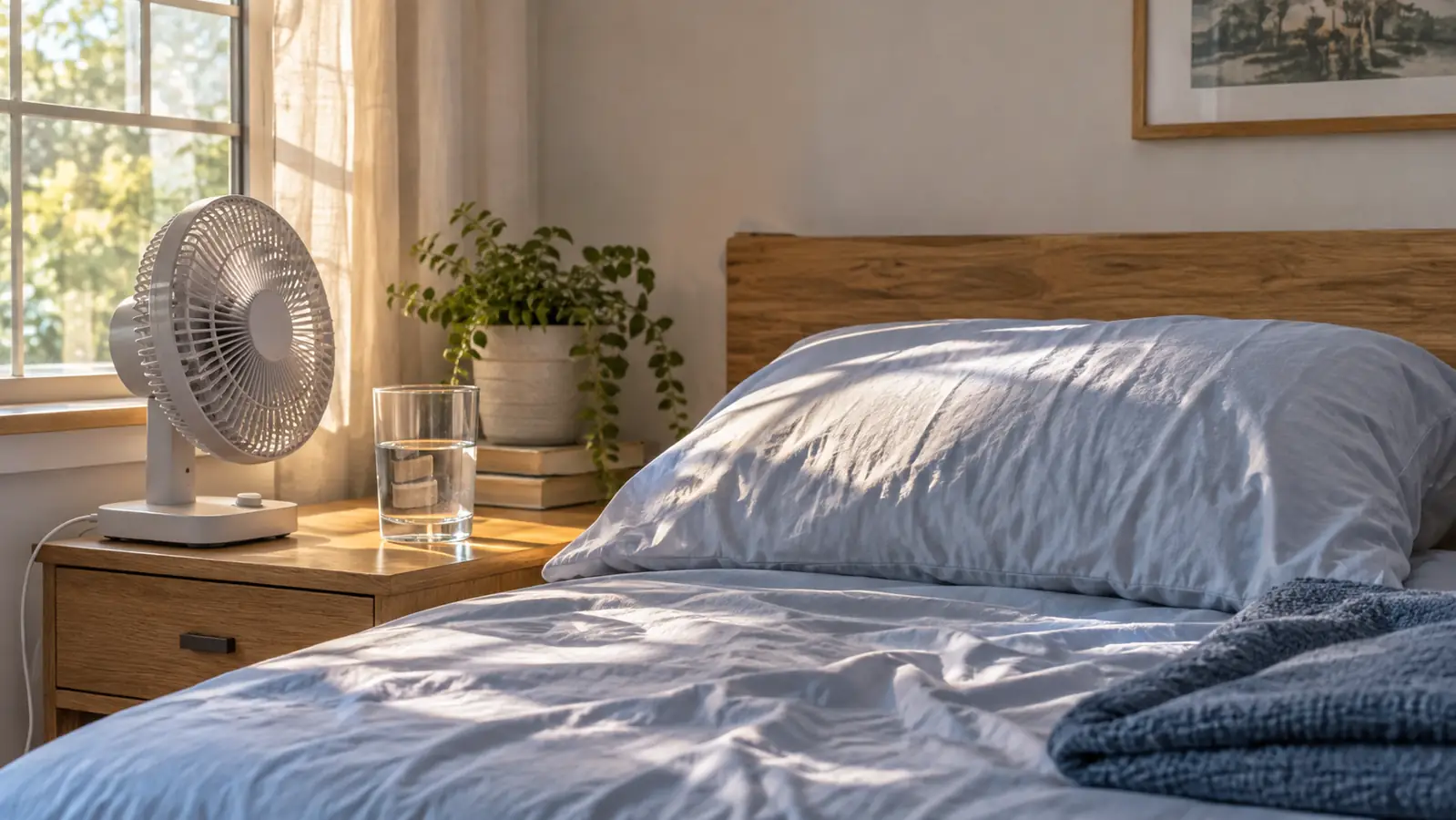
A regular comforter wins on warmth, and I am not going to pretend otherwise. On a cold night, or in a room where the air conditioning is running hard, a single lightweight layer is not enough by itself. We had two nights in July when the monsoon came through and dropped the outside temperature into the seventies, and the house cooled down more than usual. I pulled the old comforter back onto my side both times and slept under it. It felt good. That is the trade you are making. The inhand is built for a warm room and a warm sleeper. It is not built for a cold bedroom in January, and if you keep your thermostat low all year, this is not the blanket you want as your only layer.
The second place a comforter wins is simplicity for couples. One top layer covers two people. If you and your partner both sleep cold, a comforter is easier in every way: one purchase, one thing to wash, one thing to fold. The inhand only works for me because Ray and I already sleep under separate blankets. If we were both hot sleepers I would probably buy two, and then I am washing two blankets and folding two blankets. If we were both cold sleepers I would not buy one at all. I want to be clear about that, because a comparison that tells you one product wins every single point is not worth your lunch break. This one did not win every point.
The third win is forgiveness. A comforter covers a wide range of nights. It is fine in March and fine in November if you change what is under it. The inhand is a warm-weather tool. From April through October in Tucson it earns its place on my side of the bed. In December I will be under something else, and I know that now instead of being surprised by it at the first cold snap. If you want one blanket that handles the whole year in a mild climate, the comforter is the safer buy. If you want the hot months to stop being miserable, the inhand is the better tool for that one job.
If you wake up kicking the comforter off, change the layer closest to you
The inhand Cooling Blanket is a single lightweight layer with a cooling nylon face, made for hot sleepers who want a cooler start to the night. It is not a cure for night sweats and it will warm up, but it will not trap heat the way a filled comforter does. I use the queen size, 90 by 90, folded to my half of the bed.
Amazon Check Today's Price on Amazon →Who Should Buy Which
Buy the inhand Cooling Blanket if you are in perimenopause or menopause and you wake up hot once or twice a night, and the main problem is the bedding rather than the whole room. Buy it if you share a bed with someone who sleeps cold and you are tired of negotiating one comforter. Buy it if you want a layer that feels cool when you get in, moves when you turn, and can go through the wash every week. Do not buy it expecting it to stay cold until morning. It will not. Do not buy it expecting it to stop a hot flash. It cannot. It is a comfort product. It changes how the bed feels, and for me that was worth the change. If you are waking up drenched several nights a week, that is a conversation for your doctor, not a shopping cart. I have had that conversation myself, and it is a better first step than any blanket.
Buy a regular comforter if you sleep cold, if your bedroom runs cool, or if you and your partner both want one shared top layer. A comforter still wins on warmth and on the plain arithmetic of two people under one blanket. The inhand is for the person on the hot side of the bed who wants a cooler place to land. If that is you, start with the layer closest to your skin and work outward: a lighter nightgown, a pillow you can flip, a fan moving air across your side, and then the blanket. That is roughly the order I did it in over about four months, and the blanket was the last piece rather than the first. It made more difference at the end than it would have at the beginning, because by then the rest of the bed was already cooler and the comforter was the only thing left working against me.
A cooler top layer is a small change you can make tonight
If your side of the bed is the hot side, start there. Keep the heavy blanket for the person who wants it. The inhand Cooling Blanket is machine washable, lightweight, and sized 90 by 90 for a queen bed. It will not stop a hot flash. It will give you a cooler place to land when one wakes you up.
Amazon Check Today's Price on Amazon →