
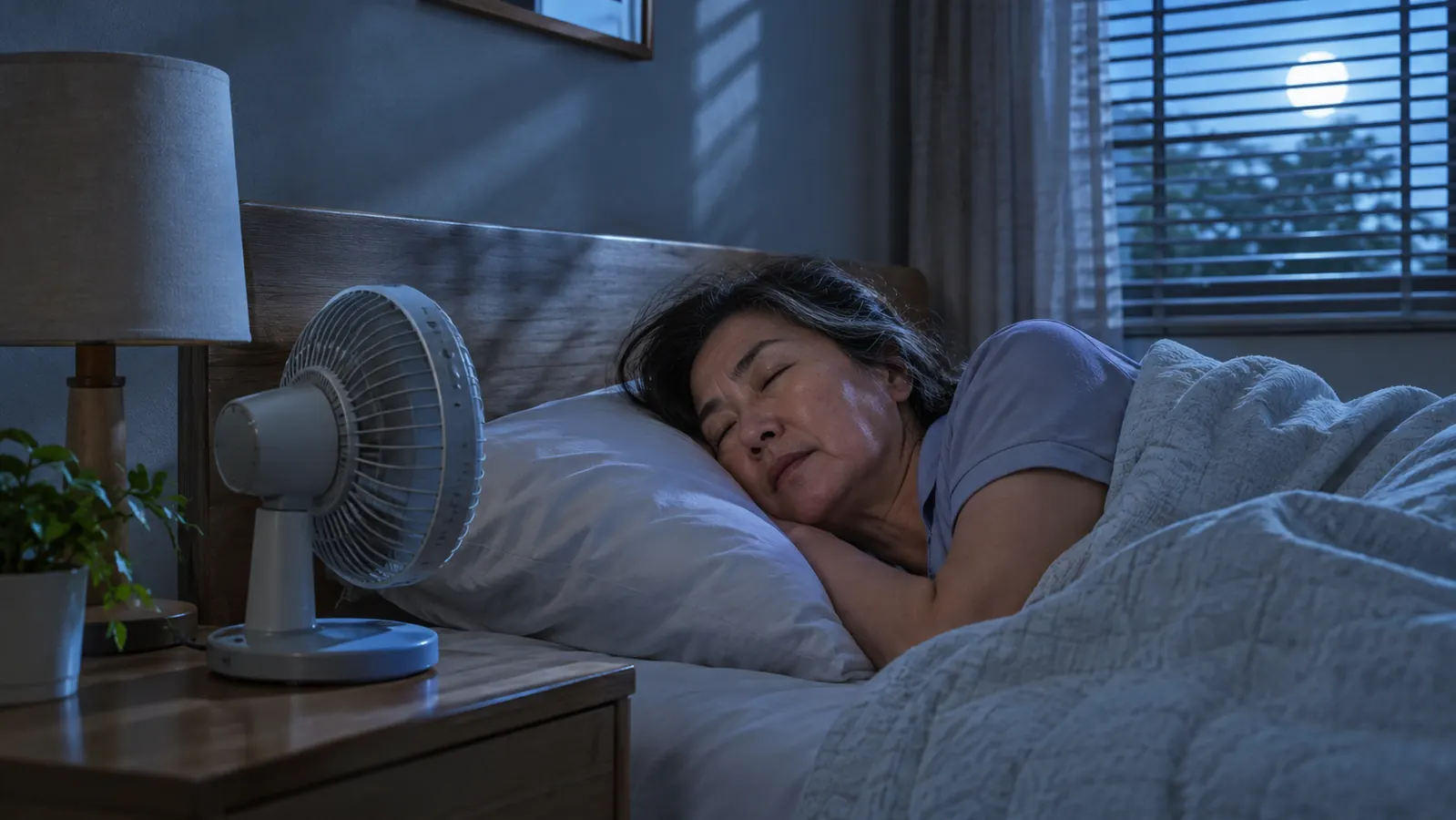
Most nights I wake up hot around 2 a.m. I am 51, perimenopausal, and I live in a single-story stucco house in Tucson with a bedroom that faces west. It soaks up the afternoon and hands it back to me all evening. Ray sleeps cold and likes a heavy blanket in July. I would keep the thermostat at 68 if I were the only person in the bed. We settled on 72 because marriage is a series of compromises, and that is one of them.
The thing that helped most was not a gadget or a supplement. It was moving air. A small Honeywell TurboForce air circulator on my nightstand, pointed at my pillow and my chest, running on low. It does not cool the room. It does not stop a hot flash, and I am not going to pretend it does. What it does is keep air moving over my skin so I am not lying in my own heat at 2 a.m. Here are ten reasons it earns that spot on the nightstand, in plain terms.
The fan that runs on my nightstand every single night from April to now
The Honeywell TurboForce HT900 is a small tabletop circulator with three speeds, a pivoting head and buttons on the unit. I run it on low almost every night and bump it to medium when a hot flash wakes me. It is the simplest thing I changed in that bedroom.
Amazon Check Today's Price on Amazon →Moving air does the cooling, and that is the whole point
A fan does not lower the temperature of a room. What it does is keep air moving across your skin, which is how your body sheds heat. The first warm night in early April, before we had the air conditioning going, I woke at 2 a.m. soaked and lay on top of the covers feeling sorry for myself. The next night I put the Honeywell on the nightstand and aimed it at my chest. I still woke up once. But I was not lying in a puddle, and I got back to sleep in about ten minutes instead of an hour.
Low is the speed you will actually sleep through
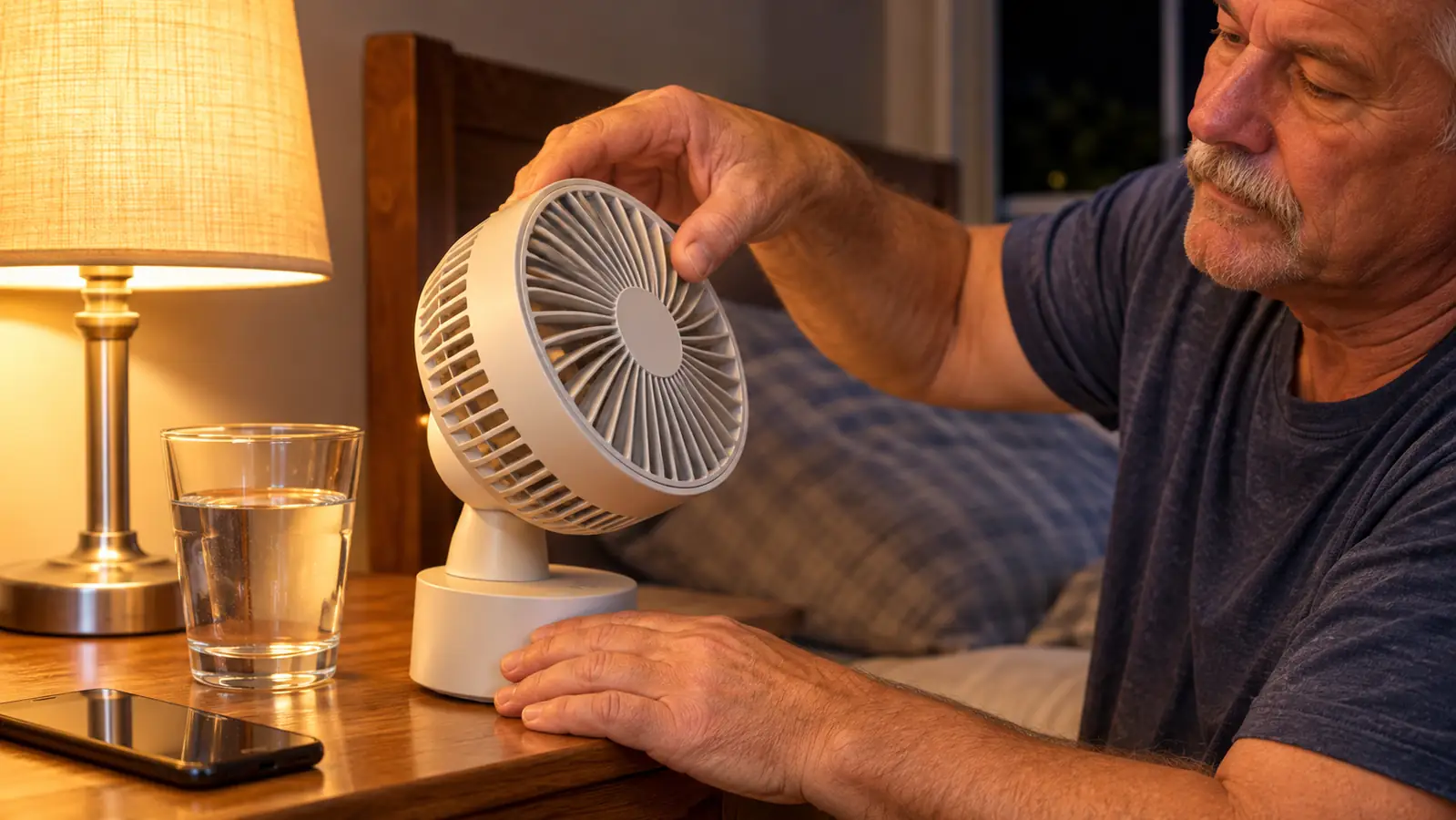
It has three speeds and a button on the unit. I run it on low almost every night, and low is quiet enough that I forget it is running. When a hot flash wakes me already warm, I reach over in the dark and bump it to medium for a few minutes until I settle. High moves a lot of air and I almost never use it at night, because the noise is more than I want next to my head. That is the honest trade: the fastest setting is a daytime setting.
The head pivots, so it aims at your chest instead of the ceiling
The head tilts through 90 degrees, so I can set it low and angle it up at my chest and shoulders, which is where I feel the heat first. Pointed at my face it dries my eyes out and I wake up feeling gritty. Pointed at the wall it does nothing at all. It took me two nights to find the angle and now I never touch it. If you share a bed, this is also how you keep the air on your side of it.
It fits on a nightstand without taking over the nightstand
The footprint is small, about 6.3 inches deep and 8.94 inches wide, and it stands roughly 10.9 inches tall. It weighs 2.6 pounds, so it does not slide around when I knock it at 2 a.m. I still have room for a water glass, my phone and the lamp. That sounds like a small thing until you have tried to fit a tower fan into a bedroom that was never designed around one. This one sits down and stays put.
You can cool your side of the bed without freezing your husband
Ray is 55, works in HVAC, and sleeps cold. He likes a heavy fleece blanket in the middle of summer. Our thermostat sits at 72 at night because 68 turns him into a burrito and he walks over and turns it back up anyway. The fan ends the argument. I aim it at my half of the queen bed, he keeps his blanket, and nobody touches the thermostat. If your partner runs hot and you run cold, flip it around. The point is that one small fan can cover one person.
It runs on a cord, so it cannot quit on you at 3 a.m.
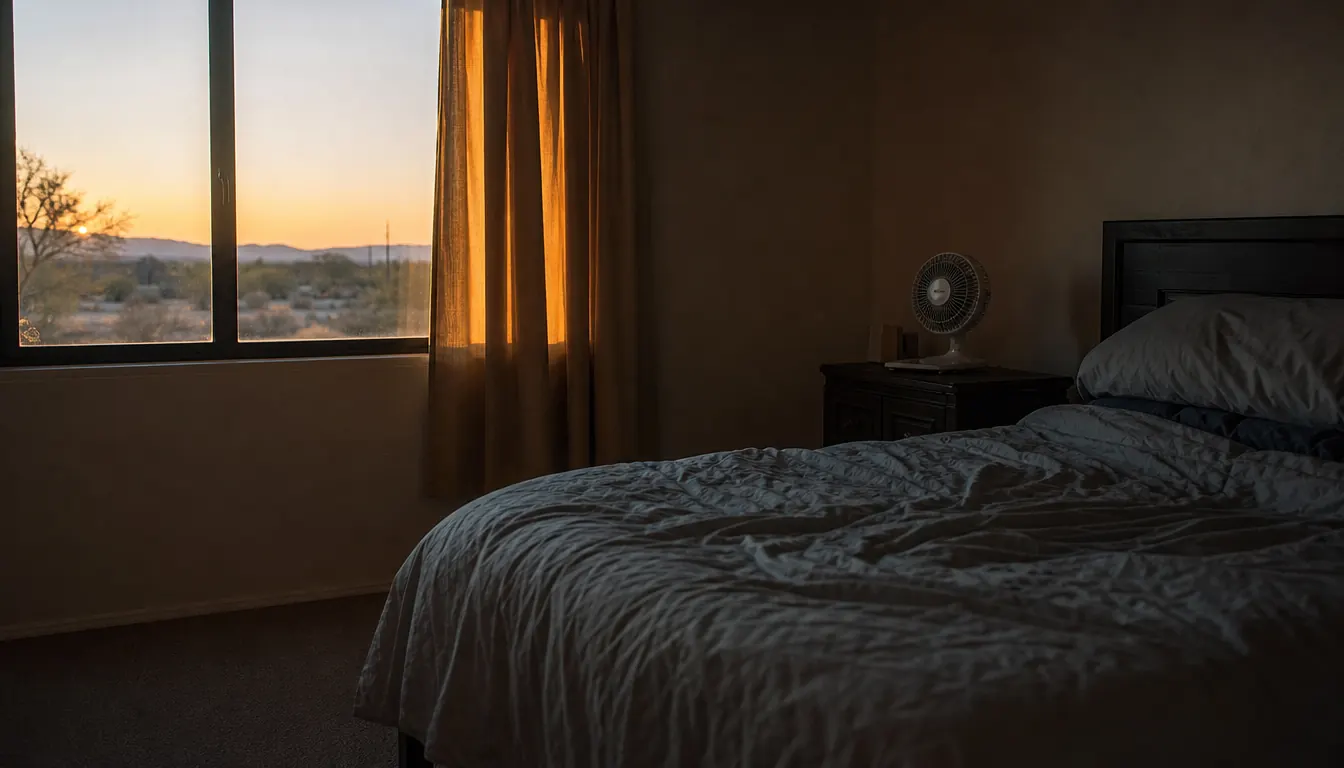
It plugs into the wall. That is the entire feature and it matters more than it sounds. I have had enough things die on me or need charging at the worst possible hour. This one has one job and a cord, and it has run every night since April without a single surprise. The trade is that you need an outlet near the nightstand. In our bedroom that meant moving a lamp about two feet, which took two minutes.
No remote, no timer, no app, just a button you can find in the dark
The controls are buttons on the unit and that is it. There is no remote to lose under the bed and no app that wants an update while you are sweating at 2 a.m. I know where the speed button is by feel now. One press goes from low to medium, one more to high, one more and it cycles back. When you are half asleep and overheated, fewer decisions is better.
The steady hum gives your ears something other than your own thoughts
This is not a medical claim, it is just what happens in my bedroom. The low setting makes a steady sound, and steady sound is easier to drift off to than a silent room where every thought gets louder. Before the fan, a 2 a.m. wake-up turned into an hour of mental list-making about the school front office. Now I get up, splash cold water on my face, come back, and the fan is still doing its thing. I am not promising it fixes anything for you.
It moves the cool air your air conditioning is already paying for
Cold air settles, and the far corner of our bedroom stays warmer than the rest. A small circulator stirs that air so the cooled air reaches the bed instead of hanging around the floor. That let me stop asking Ray to drop the thermostat, which was the real source of most of our nighttime conflict. I am not going to quote you energy savings. I will say we argue about the thermostat less now, and the room feels more even.
It makes the rest of your cooling setup work better
None of this works alone. The fan moves air over the sheets so they feel less damp and clingy. It moves air over the cooling blanket I fold in half on my side of the bed, which feels cool when I first get under it and warms up after a while. It moves air over the nightgown that dries faster than my old cotton t-shirts did. The fan was the first thing I bought this year, back in April, and it is the piece everything else leans on.
What I'd Skip
I would skip pointing the fan at your face all night. It dries your eyes and by morning you feel like you slept in a sandbox. Skip high speed for sleeping, too. At some point you are just paying for noise. I would also skip the idea that a fan replaces a conversation with your doctor. If your night sweats are new, or getting worse, or coming with other symptoms, that is a doctor conversation, not a shopping trip. Mine knows what I am dealing with. A fan helps with comfort and the sleep environment, and that is the whole of what I claim for it.
It does not cool the room and it does not stop a hot flash. It keeps the air moving over my skin so I am not lying in my own heat at 2 a.m.
Start with the fan on the nightstand, then fix the bedding around it
Three speeds, a pivoting head, buttons on the unit, and a cord that keeps it running all night. Mine has been on that nightstand since April. If you wake up hot and lie there in your own heat, this is the smallest change I made in that bedroom and the one I would make first again.
Amazon Check Today's Price on Amazon →