
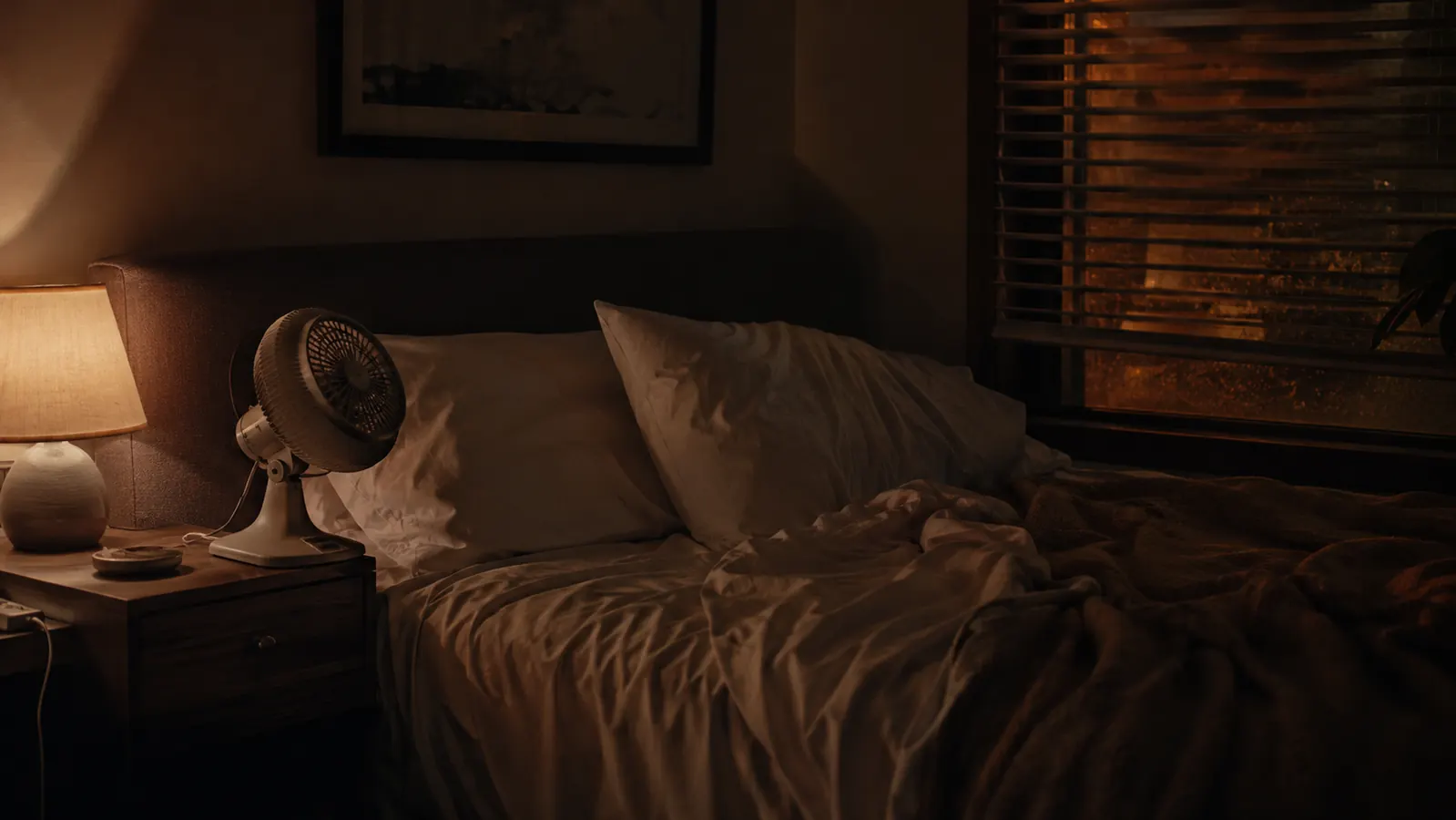
Short answer: for one hot sleeper in one bed, the Honeywell TurboForce air circulator wins, and it is not particularly close. A tower fan moves a wide, gentle band of air across a room. The TurboForce moves a narrow column of air exactly where you point it, and at 2 a.m. the place I want air is my own pillow. I bought the small HT-900 tabletop model in April, after a warm night when I woke up soaked, lay on top of the covers, and watched the clock until 5:45. It has been on my nightstand every night since.
That does not make a tower fan a bad fan. It makes it a different shape of air. My husband Ray is an HVAC technician, which means he has opinions about air movement the way some men have opinions about barbecue, and his short version is that you buy the airflow pattern that matches the room. I have slept in enough hotel rooms with a tower fan humming in the corner to know what he means. Those fans cooled the room. They did not cool me. The job in my bedroom is narrower than that: one 51-year-old woman in perimenopause, waking hot once or twice a night, next to a man who sleeps cold and likes a heavy blanket.
| Honeywell TurboForce HT-900 | Typical tower fan | |
|---|---|---|
| Air at your pillow | Narrow column you aim by hand, 90 degree pivoting head | Wide band, usually sweeping across the whole room |
| Cooling the room itself | Moves air from one spot on a nightstand | Built to sweep a wide area from the floor |
| Bedside footprint | 6.3 by 8.94 by 10.9 inches, 2.6 pounds, fits on a nightstand | Slim base, but it stands on the floor |
| Changing direction without getting up | Manual head, you reach over and move it | Oscillates on its own |
| Height of the airflow | Sits at bed height, and the listing allows a wall mount | Air leaves near floor level and has to rise |
| Extras | Three speeds, button controls on the unit. No remote, no timer, no oscillation | Often includes a remote, timer and sleep setting |
| Cleaning | Plastic housing wipes down, no internal slot to reach into | Narrow internal barrel is harder to get at |
| Setup | Plug it in, press a button | Most require the base to be attached first |
| Best for | One sleeper who wants air on their face | A room, or two people who both run hot |
Where the Honeywell TurboForce Wins
Placement is the first thing the Honeywell gets right. The fan measures 6.3 inches deep, 8.94 wide and 10.9 tall, and it weighs 2.6 pounds. That is small enough to sit on a nightstand without stealing the lamp's spot, and it puts the air outlet at roughly pillow height. A tower fan stands on the floor. Its air leaves near your ankles and has to climb, and by the time it reaches the mattress it has spread out and slowed down. You can tilt the head on this fan up or down through 90 degrees, and the listing also allows a wall mount if your nightstand is already full.
The first week I owned it, I tried it in three places. On the dresser across the room, where it moved plenty of air that never arrived. On the floor beside the bed, where it blew on my shoulder and nowhere else. And on the nightstand, about two feet from my pillow, aimed slightly down at my chest. Only the third one worked, and it has not moved since April. The lesson was not subtle, and it was mostly about height. From the floor the air caught my shoulder and stopped there. From the nightstand it reached my face and chest, which are the two places that bother me most when I wake up hot. If your nightstand is already crowded, the listing says this fan can be wall mounted, and a small shelf at the same height would do the same job. What I would not do is put it on the floor and expect the same result, no matter which speed you choose.
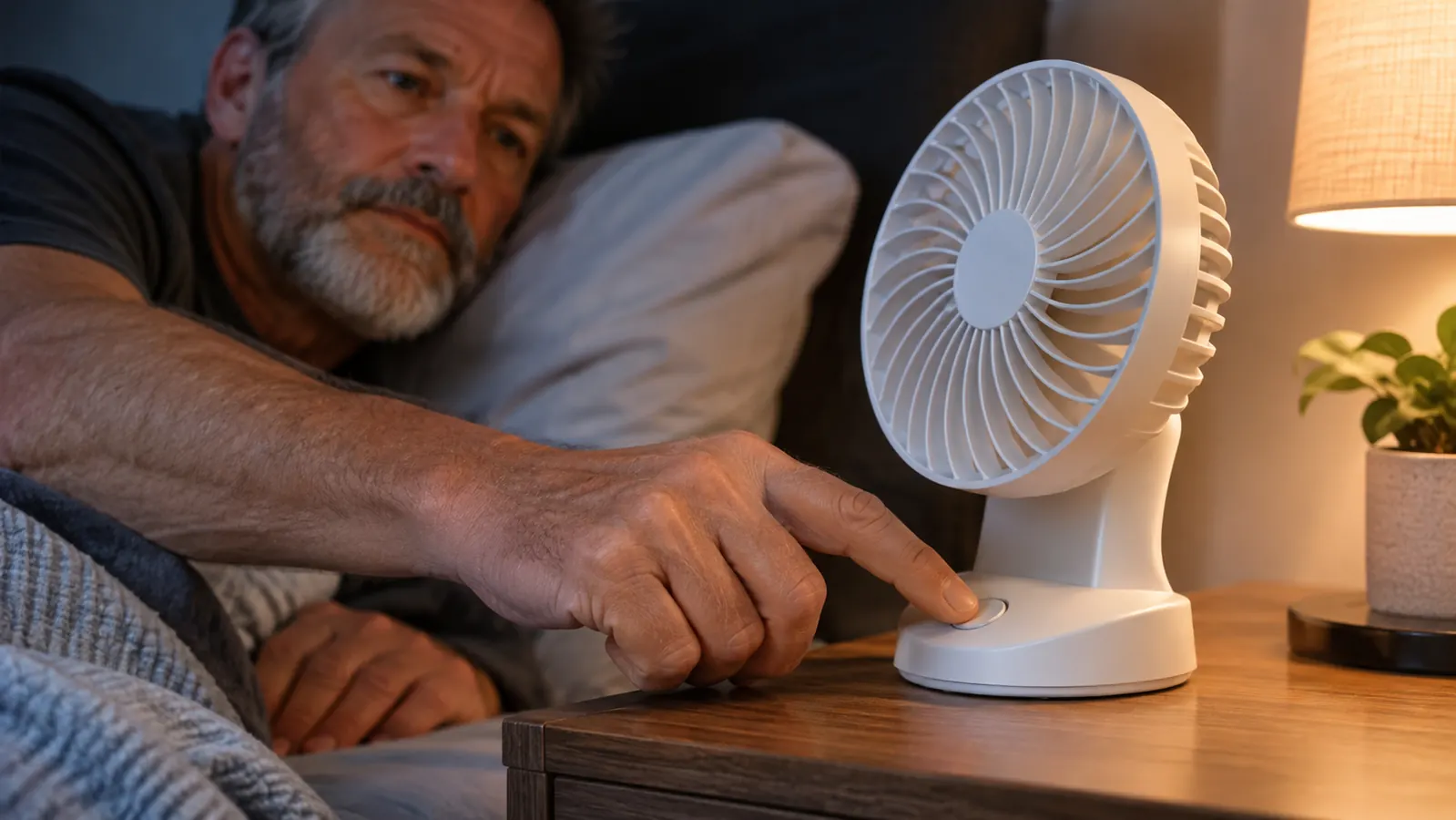
The second thing it gets right is that it is aimed rather than diffused. The airflow capacity is 185 cfm, and the listing says you can feel it from up to 25 feet away. I do not need 25 feet. I need about two feet, from the nightstand to my side of the mattress, and I need that air in a column instead of a breeze. Three speeds, three buttons on the machine, no menu to learn in the dark. Low is what I run on an ordinary night. Medium is what I press at 2 a.m. when I wake up with my hair stuck to my neck. High exists, and I am glad it exists, and I almost never use it after lights out.
Where a Tower Fan Wins
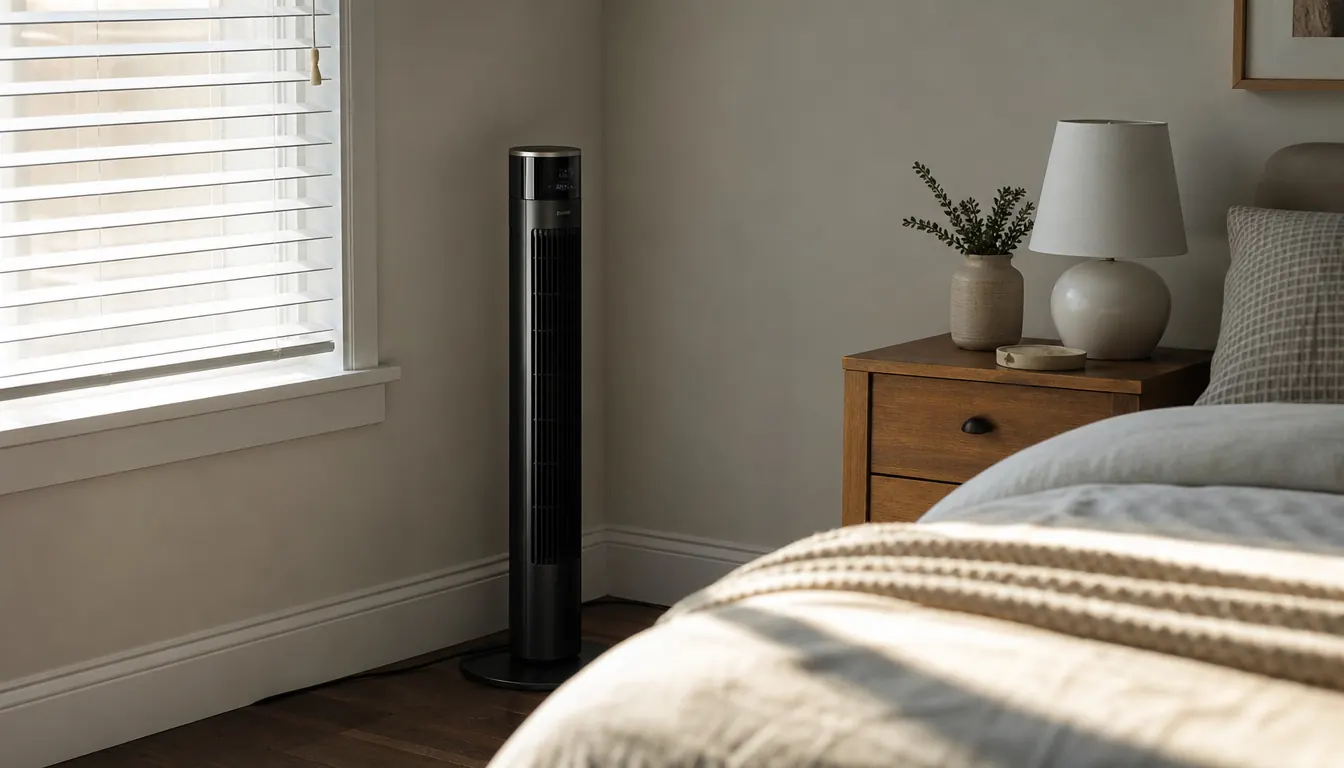
A tower fan wins on coverage, and I want to be straight about that. It pushes a wide band of air, and most models oscillate, sweeping that band from one side of the room to the other without anybody getting up. The TurboForce has no oscillation at all. If I want the air moved, I reach over and move the head myself. For a living room with four people in it, or a bedroom where both partners run hot, the tower fan is doing a job the tabletop fan cannot do. It cools a space. Mine cools a person.
A tower fan also wins on convenience features, because it usually has some. Many models come with a remote, a timer, and a sleep setting that steps the speed down over an hour, and none of that is on the HT-900. The controls are manual and they are on the machine. It is also worth saying out loud that a tower fan does not ask for nightstand real estate. If your nightstand already holds a lamp, a book, a glass of water and a phone, adding a fan to it is a negotiation. And a floor fan cannot be knocked over when you swat at your alarm at 5:45.
I tested the coverage idea the cheap way. I set the Honeywell on the dresser, roughly eight feet from the bed, on medium, and lay down. I could feel it on my forehead and almost nowhere else, and by the time the air crossed the room it had the texture of a sigh. That is the gap a tower fan fills. Its whole design is a wide band pushed out of a long slot from floor level, and the sweep carries that band across the room instead of leaving it in one place. For a bedroom where two people are both running hot, that band does real work. For me it was air arriving everywhere except the one spot that needed it, and I got tired of moving my head around to find it.
A tower fan cools the room. The TurboForce cools the person in it, which is the only thing I was ever actually trying to do at 2 a.m.
The Noise Question, Because at 2 A.M. It Decides Everything
Noise is the part that decides whether a fan survives the night. On low, from about two feet away, the Honeywell is a steady low hum, close to the sound of the air handler running in the hall. I can sleep through that. On medium it is noticeably louder, which is fine, because I am not sleeping when I press that button. On high the pitch sharpens enough that Ray rolls over, so high stays a daytime setting in my house. The listing claims it runs 25 percent quieter than comparable fans. I cannot verify a percentage. I can tell you that a fan pointed at your ear is audible, and that this one has never been the reason I woke up.
Tower fans are usually described as quiet, and at the lowest setting they often are. The motor sits at floor level, the air has to travel up a long slot before it reaches you, and that distance softens the sound. It also softens the air. What I found after several warm nights of moving things around is that sound was never my problem in the first place. Heat was my problem. A fan I could barely hear that also barely reached me did nothing for the 2 a.m. wake-up, no matter how pleasant it sounded.
There was a stretch in June when I ran the fan on medium all night just to see what would happen. I slept, but I woke up more, and I honestly could not tell you whether that was the heat or the sound. What I took from it is simpler than an argument about numbers. The fan is quietest on low, low is the setting I want at 2 a.m., and low only works if the fan is close enough to matter. That is the whole case for a small fan on a nightstand. A bigger fan in the corner has to be turned up to reach you, and the turning up is where the noise comes from.
Two Things I Would Change
The first is the missing oscillation. Not because I need the whole room cooled, but because a slow sweep across the bed would keep the air from feeling stale on a long hot night. As it stands, I nudge the head by hand, which is a small thing at 10 p.m. and a slightly bigger thing at 2 a.m. The second is that the controls live on the unit, so changing speed means reaching into the dark and finding the right button by feel. A remote would be a kindness.
I knew both of those things before I bought it, and I bought it anyway, because at this size and with this aim there was nothing else in the same conversation. It is also worth knowing what the fan does not do. It does not stop a hot flash, it does not treat night sweats, and it does not fix a bedroom that faces west and holds the afternoon desert heat until nine at night. It moves air. That turned out to be the part I could actually control.
The button situation sounds small and is not. The controls sit across the front of the unit, and in the dark you find them by counting in from the edge. Twice now I have gone from low straight to high by mistake, which is a fast way to wake a husband who was sleeping fine. My fix is boring and it works: I set the speed before I get into bed and leave it alone unless the night goes bad. The pivoting head helps there, because once it is aimed at the pillow it stays aimed at the pillow no matter how many times I roll over. What I would still like is a way to change speed without reaching into the dark at all, and I am not holding my breath.
The fan I reach for at 2 a.m., not the one that cools the whole room
The HT-900 sits on my nightstand, points at my pillow, and runs on low most nights. Three speeds, a pivoting head, no menu to learn in the dark. It has been there since April.
Amazon Check Today's Price on Amazon →Who Should Buy Which
Buy the Honeywell TurboForce if the heat problem is you and not the room. If you wake up hot once or twice a night while your partner sleeps fine, if you have a nightstand within a few feet of your side of the bed, and if what you want is moving air on your face and chest for the ten minutes it takes to settle back down, this is the tool for that. It also suits anyone who does not want another remote, another app, or another thing to remember to charge.
Buy a tower fan instead if you and your partner both run hot, if the room itself is the problem, or if you specifically want a fan that sweeps on its own and a timer that shuts it off after an hour. If your side of the bed is against a wall with no nightstand, a floor fan makes more sense than a tabletop one. And if you are shopping for a bedroom where the air already moves well, put the money into bedding first. Sheets that do not cling matter more than a second fan.
One more thing before I get off the soapbox. A fan changes your bedroom, not your body. If night sweats are new, getting worse, or wrecking most of your week, that is a conversation for your doctor, and mine has been useful to me. What I am describing here is comfort and a better sleep environment. Nothing more than that.
One small fan, aimed at one pillow
It will not stop a hot flash and it is not meant to. What it does is take the edge off the ten minutes after one, so you can lie back down instead of lying there awake doing math about how many hours are left. My doctor gets the medical questions. The fan gets the nightstand.
Amazon Check Today's Price on Amazon →